Other animals
Discover the flora and fauna of Westerbergen holiday park in Drenthe
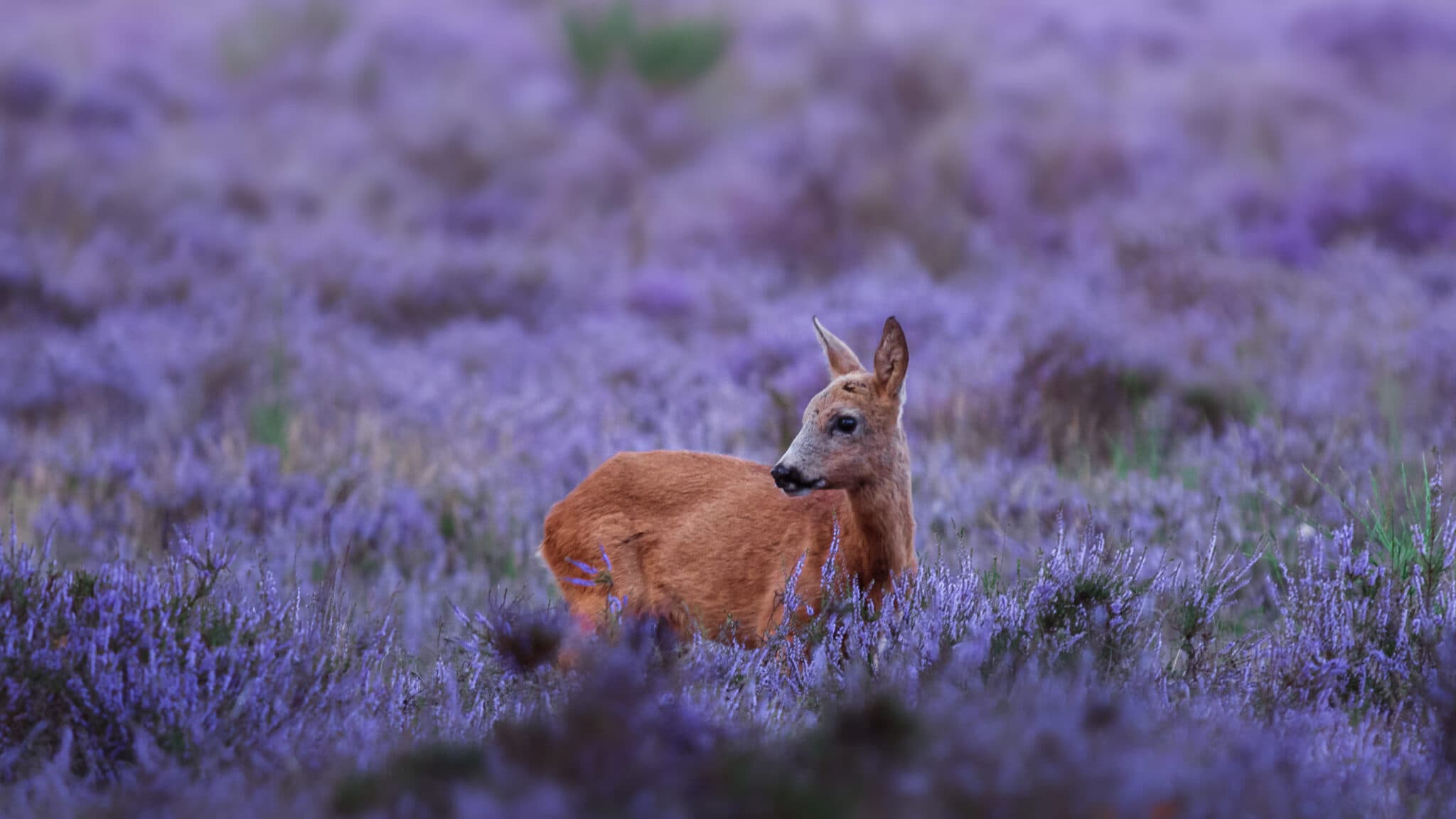
The largest animal, and the one that instantly endears itself to everyone who sees it, is the roe deer. The roe deer belongs to the deer family. The larger red deer found in the Veluwe do not live in Drenthe. Roe deer, on the other hand, are all the more common there. Before the 1940s, roe deer were relatively rare in Drenthe.
Before Westerbergen was converted into a holiday resort, roe deer could be found in the woods all year round. During the winter months, it is certainly not impossible to spot one or more roe deer in the undergrowth whilst walking through the woods behind the main building. It seems they are less shy then than in the summer. Yet roe deer are also found at Westerbergen in the summer, and even close to the bungalows. This happens at night.
In summer, the roe deer hide in the dense woodland. In the state-owned woods on the other side of the railway line, they can also be spotted in summer, although rarely. The best chance of seeing roe deer is at dusk, particularly near the ponds and patches of pasture bordering the woods. They come to the ponds to drink and to the pastures to graze.
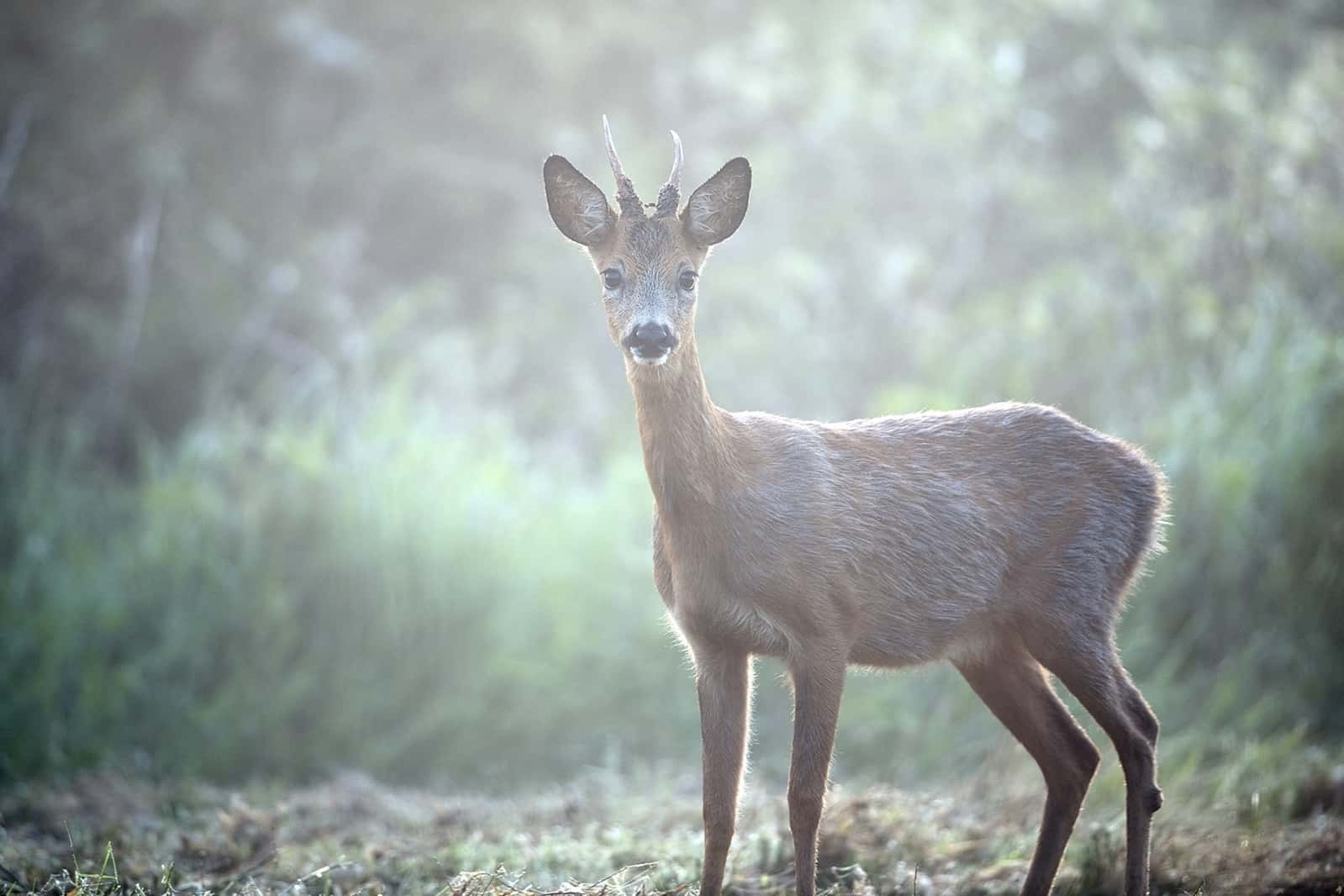
The roe deer’s most important defence against its enemies is flight. It is incredible just how fast it can move across open fields. However, even in the woods, it manages to work its way through the dense undergrowth with great agility. Seeing them running, and in small groups, is perhaps the most beautiful sight one can witness with roe deer.
An animal one sees more often is the wild rabbit. As it closely resembles its domestic counterpart, there is no need to describe what a rabbit looks like. Wild rabbits are brown in colour on top, sometimes verging on black. They are found in large numbers on Westerbergen. It is possible to see them from very close by. Rabbits, just like young dogs, can play and frolic with one another in a particularly charming way. They become so engrossed in their play that they pay absolutely no attention to their surroundings, allowing one to get close.
Rabbits are herbivores. Just like roe deer, they are fond of young trees, and in particular the buds. Young pines and spruces are spared by the roe deer because of their sharp needles, but rabbits seem to take pleasure in pulling the saplings out of the ground and then doing nothing further with them.
Rabbits are often confused with hares. Hares are much longer and also have longer ears. Hares are usually found in meadows and farmland and are not very common in Westerbergen. The
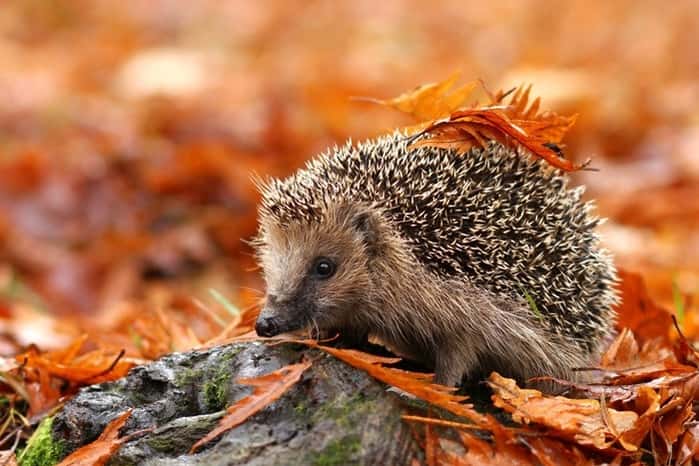
hedgehog is a charming animal, sometimes mistakenly called a porcupine. The porcupine is a completely different animal that is not found in the Netherlands. The hedgehog is so charming because, when approached by people, it usually does not run away but curls up with all its spines standing straight up and tucks its head under its body. The spines are sharp, so it is impossible to pick up the hedgehog with bare hands. If a predator manages to roll the hedgehog onto its back, so that its belly is exposed, the hedgehog is doomed. If you come across a curled-up hedgehog, it is important to wait for a few minutes in complete silence. The spines will then slowly lower and, at some point, the pointed head will emerge from beneath the belly. At the slightest movement or sound, it rolls itself up again in a flash.
The hedgehog feeds mainly on field mice, young rabbits, caterpillars, snails, worms, beetles, etc. In winter, hedgehogs are not to be seen. They burrow underground and hibernate.
This text is taken from the booklet ‘The Origin of the Westerbergen’, compiled by Dr E.J. Offerhaus
Sign up for the newsletter
Protected by reCaptcha, Privacy Policy and Terms of Service apply.