Wild plants
Discover the flora and fauna of Westerbergen holiday park in Drenthe
If you ask someone travelling to Drenthe what sort of plants they expect to find there, they are almost certain to mention heather first and foremost. Less well known is that there are many different types of heather, three of which are particularly common in Drenthe, although usually not in the same area. When people talk about heather, almost everyone immediately thinks of one of these three types, namely the one officially known as common heather. It is indeed a shrub, as the stems are more or less woody. Everyone knows how common heather flowers; namely, a whole series of tiny flowers arranged one above the other, each only a few millimetres in size. Because all these flowers are so close together, from a distance the heather looks like a vast purple expanse. Heather flowers in late summer, usually in early August, and retains its beautiful purple glow until around mid-September. With most flowers, the blooms wither once they have finished flowering, after which the petals fall off. This does not happen with heather. The only sign that it has finished flowering is that the flowers change colour. They turn brown and usually remain on the plant well into the following year.
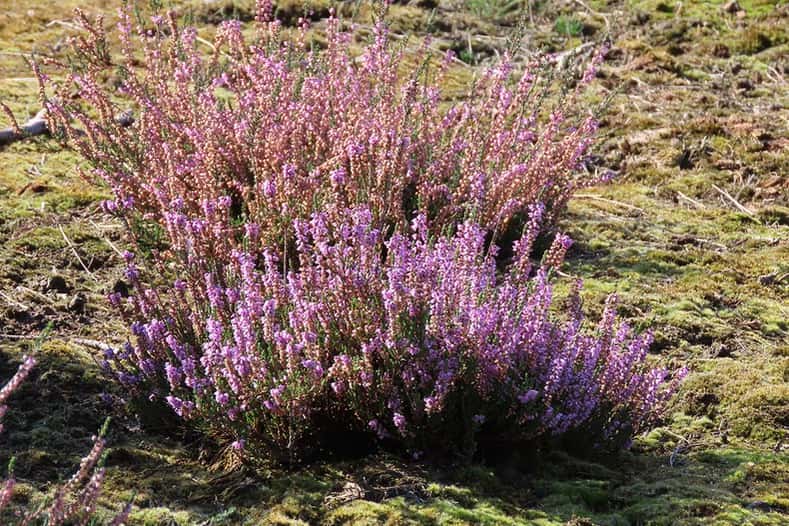

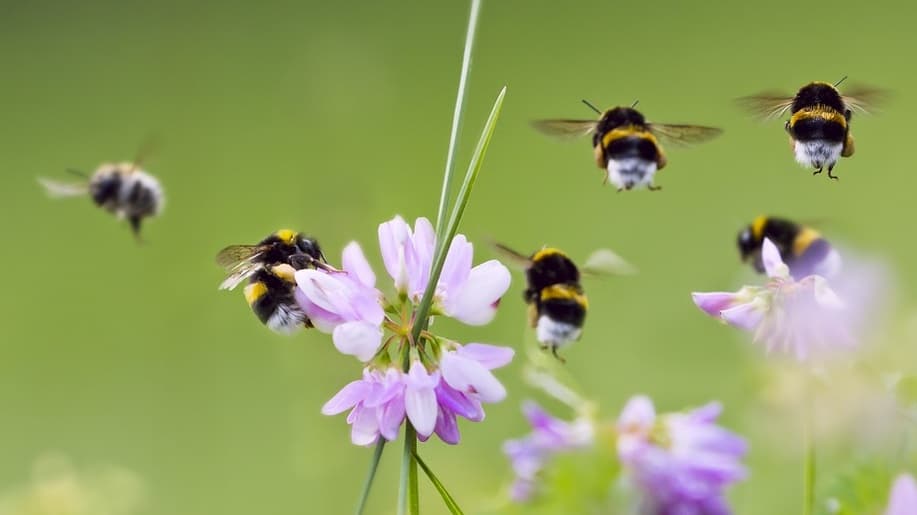
Heather needs plenty of sun and not too much moisture. That is why you do not see heather in the woods, nor in lower-lying and therefore generally more damp areas. When there has been a fair amount of rain in the spring, followed by a dry, sunny summer, the heather looks at its best. In wet summers, it does not fare so well. Heather is particularly popular with bees. They produce a honey with a distinctive flavour. You’ll often see beehives or hives on the heathland. Don’t get too close: bees can sting quite badly!
The heather plant does not cope well with heavy foot traffic and cannot tolerate camping at all. There are still small patches of heather on the campsite. Unfortunately, quite a lot of it gets trampled in the summer, so that almost every year a bare patch has to be reseeded with grass seed. Certain types of grass are, in fact, more resistant to trampling.
As already mentioned, the heathland used to serve a purpose in the past, namely for grazing sheep. However, it had other uses too. For instance, heather sods were used as roofing material, which can still be seen at the open-air museum in Schoonoord. Heather was also used for something else: namely, for making heather brooms.
Heather has one major drawback, and that is its high flammability. So never smoke on the heath. A single discarded cigarette butt is enough to start a heath fire that cannot be stopped. Yet heathland is sometimes set alight deliberately. This is because as a heather plant ages, it does not become any more attractive. It develops too much woody growth and flowers less. Eventually, after about seven years, the plant dies. In the past, when the heather was kept young and short by sheep grazing in the meadows, this was not a problem. Now it has become one, which is why heathland is sometimes burnt off in winter. It goes without saying that this must be done with great care. Even these controlled burns have occasionally got out of hand. Once the heather has been burnt, the heather seed – which has fallen in large quantities just below the surface and therefore has not been burnt – now has the space to germinate, so that after a year, fresh young heather has grown again. The second type of heather is the heather, also purple in colour, but with a slightly redder hue. Heather flowers are quite remarkable. They are larger than those of common heather and have a diameter of about two centimetres. When you first look at such a flower from the back, it appears to be a very ordinary little flower with about six to eight red-purple petals. But if you turn the flower over, you’re in for a big surprise, because it turns out that it isn’t a single flower at all, but around six to eight separate little flowers, each more or less shaped like an urn and clustered together at the base. In each little flower, the pistil and stamens are clearly visible.
Like common heather, cross-leaved heath prefers sunshine, so this heather is not found in the woods either. A major difference, however, is that cross-leaved heath requires plenty of moisture and therefore grows in somewhat wetter areas. Precisely because there is a great deal of variation between dry and damp areas at Westerbergen, both types of heather are found there. There are patches of ground that are just dry enough for common heather and just wet enough for cross-leaved heath, so that both species grow intermingled. This is very clearly visible on the small heathland area situated along the yellow and red walking routes. Just after the first burial mound, the routes turn left. You can now see the field in question on the right-hand side. The effect of dry or wet soil is particularly evident in the aforementioned glacial hollow, which lies in the adjacent heathland along the blue walking route. In a hollow, all the rainwater collects in the centre. Here, you can see a circular area where only heather grows. The edges of the hollow are naturally drier, so heather has appeared here. If the ground becomes too damp, even the heather cannot survive. In that case, bent grass and cotton grass appear.
The heather blooms earlier than the common heather and has a longer flowering period. As a result, one can still find flowering specimens even in October. Like the common heather, the heather retains its petals after flowering, and these too turn brown. Even on the spent specimens, it is still clearly visible that they are actually a cluster of tiny flowers. There are around 600 different species of heather spread across the globe. Particularly in southern countries, there are species that grow much larger and have large root tubers. The famous briar pipes are made from these root tubers.
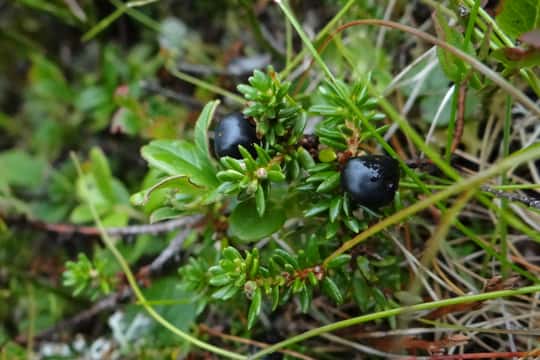
The third type of heather is crowberry, which, although not strictly speaking a heather species, is always mentioned in the same breath as the other two. With this heather, it is not the flowers that are of interest, but the fresh green colour of the leaves. These are small plants, usually no larger than ten centimetres, with very small, thick leaves growing close together. Common heather and cross-leaved heath can sometimes look a bit barren when they are not in bloom, but that is precisely the charm of the heathland in Drenthe: nestled amongst the heather are those fresh green patches, which provide a welcome change of scenery. The crow heather is indeed specific to Drenthe, as it is a plant species that actually belongs in the more northerly countries. The slight difference in temperature between Drenthe and the south of the country means that crow heather still thrives in Drenthe and on the Wadden Islands, whilst in the Veluwe one sees only the odd plant here and there, and in Brabant none at all.
It has already been mentioned that with crowberry, it is the leaves that are of interest, not the flowers; this does not mean, however, that this heather does not flower. The flowers are, however, very small and inconspicuous, brownish-red in colour, and, moreover, there are far fewer flowers per plant than with common heather. If you are not aware of this, you would hardly notice when they are in bloom, which occurs in spring, in April or May. Later in the year, dark blue berries appear, containing the seeds. These berries are a delicacy for crows, which is how the name ‘crow heather’ came about. When a bird eats a berry, it often drops the seeds a long way away, or the seeds leave the body again via droppings, and in this way the seeds can be spread far and wide. If they land in a favourable spot, the seeds can germinate and new plants will grow. We will encounter this method of seed dispersal more often, as with the rowan, the wild cherry, the juniper and many others.
Heather is found on Westerbergen near the burial mounds, where several patches are visible. A particularly beautiful patch of heathland, rich in heather, lies to the left of the red walking route, just before it turns right, running parallel to the railway line and then continuing for a stretch through the meadows.
Another name that is by far the most frequently mentioned is gorse. Gorse is a shrub and can sometimes grow to a height of several metres. Gorse is at its most beautiful in spring – as is the case with many plants, in fact – so the early season is actually a much better time to visit Westerbergen than the peak season. Moreover, so much changes at that time of year that you can observe the changes from week to week. In summer, everything is fully grown. Not much changes then, and the most beautiful flowers have finished blooming.
The gorse bushes have green twigs and few, very small leaves. Once the flowers have finished blooming, the fruits, known here as pods, form. In terms of shape, they actually look just like the snow peas that are eaten as a vegetable. However, the colour quickly changes to dark brown to black. When the seeds are ripe, and especially when the sun shines strongly in summer, the pods burst open with a clearly audible pop, scattering the seeds far and wide. This is yet another way of dispersing seeds, different from what we saw with the berries of the crowberry.
Gorse does not tolerate extreme cold well. In harsh winters, practically all the gorse may freeze, so that in the following spring the golden-yellow flowers do not appear anywhere. The seeds, however, can withstand the cold. They germinate and in subsequent years these new shrubs do come into bloom again. This is therefore the reason why clusters of gorse shrubs appear to shift position. For years on end, beautiful gorse bushes stood on the roadside verge in front of the lawn by the main building and to the left of the petrol pump. They disappeared during a harsh winter, but in recent years there have been quite a few gorse bushes again amongst the bungalows, particularly near bungalow 98 and by the second toilet block on the campsite. In good gorse years, it can happen that, during the flowering period, all one sees on the wild land in Drenthe is a single vast yellow field.
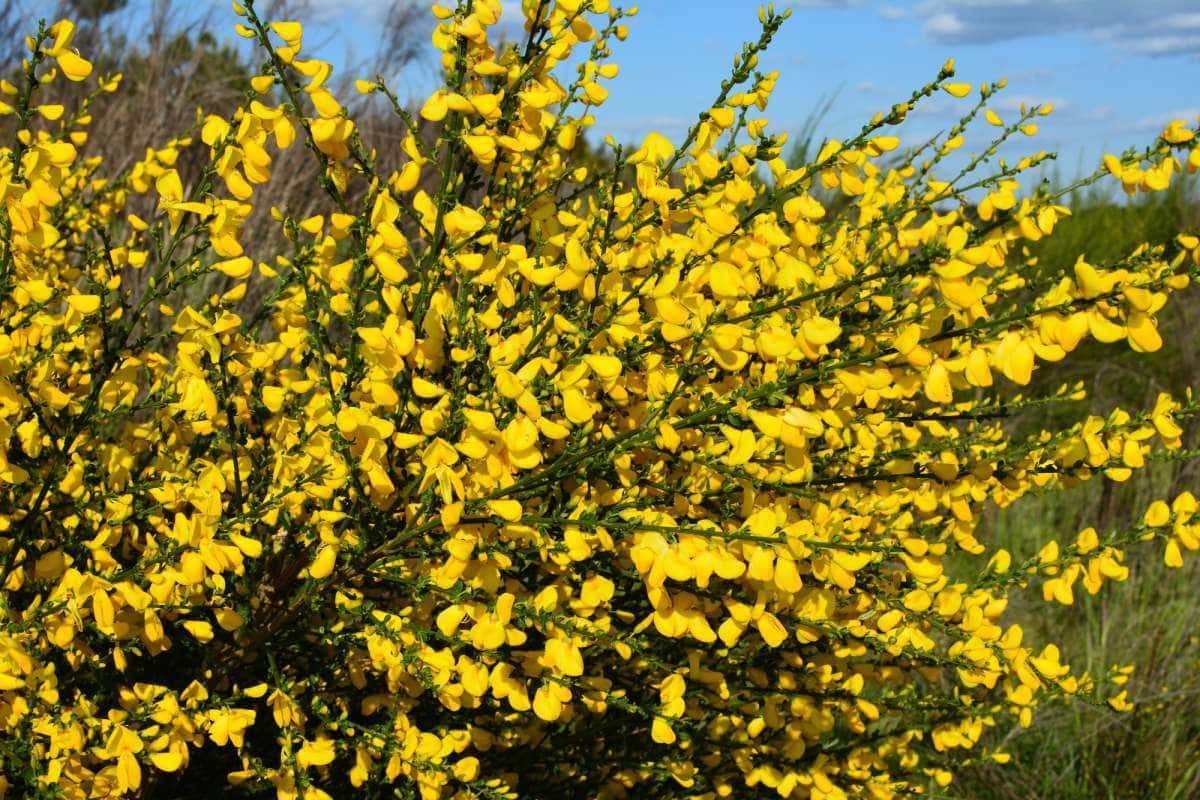

It is very tempting to pick flowering broom branches and put them in a vase. However, this is strictly forbidden! This is because broom is a protected plant in Drenthe. Besides, there is no point in picking them, as the flowers wilt very quickly once picked. The same applies to all other wild flowers: they are much more beautiful in the wild than in a vase.
The next plant to be discussed is the fireweed. It is particularly common in the bungalow area and on the heathland bordering Westerbergen. These are eye-catching plants, usually with a single stem that rises straight up and towers above everything else, as these stems can grow to a metre or more in height. Attached to the stem at regular intervals are narrow, tapering leaves, which are often ten centimetres long and only about two centimetres wide. The leaves closely resemble willow leaves, hence the name willowherb. The flowers, a soft red colour, appear on the top thirty centimetres of the stem. Many of them emerge from a single stem, and it is precisely this way of flowering that makes the willowherbs stand out. The lowest flowers open first. By the time they wilt, the flowers above them appear, and this continues right up to the top. Consequently, the flowering period is long. The first flowers appear around the beginning of July, but some are still in bloom by the end of September. At that time, only the top four flowers are visible. In the middle of summer, the entire sequence can be clearly seen on a single plant. One must then look from top to bottom. At the top, the flowers are still in bud; below that are a number in full bloom, followed by a few wilted and faded ones, and below those again are the fruits. These fruits are long, thin tubes and are usually red in colour. When these fruits burst open, the seeds emerge, each equipped with a long seed pappus. Thanks to this tuft, the seeds can be spread quite far. In autumn, the leaves wither and much of the seed tuft remains clinging to the plant in tangled strands, so that it looks less attractive. We now come to the cotton grass, also known as bog moss or, in the Drenthe dialect, ‘vennepluus’, although this is actually a slightly different plant; however, the names are often used interchangeably. This time, the focus is not on the inflorescence, but on the seed fluff. In May and early June, the seed fluff appears at the very top of the stem; it looks like a little white ball of wool and actually feels like wool too. Cotton grass requires a great deal of moisture. It doesn’t quite grow in the water, but it does grow on the boggy edges of ponds or on patches within the pond that are in the process of becoming overgrown. At Westerbergen, the main gathering place for cotton grass is the large fen. Standing at the edge of the fen, the woolly tufts are clearly distinguishable on the nearest plants, but further away they appear as white dots everywhere. If there are many clustered together and they can be seen from a greater distance, a very peculiar effect can arise. It then looks as if there is a small field of snow. This can
be seen very clearly almost every year at the fen situated in the Echtener sand. The edges and immediate surroundings of this fen are very marshy, making this area an ideal growing site for cotton grass.
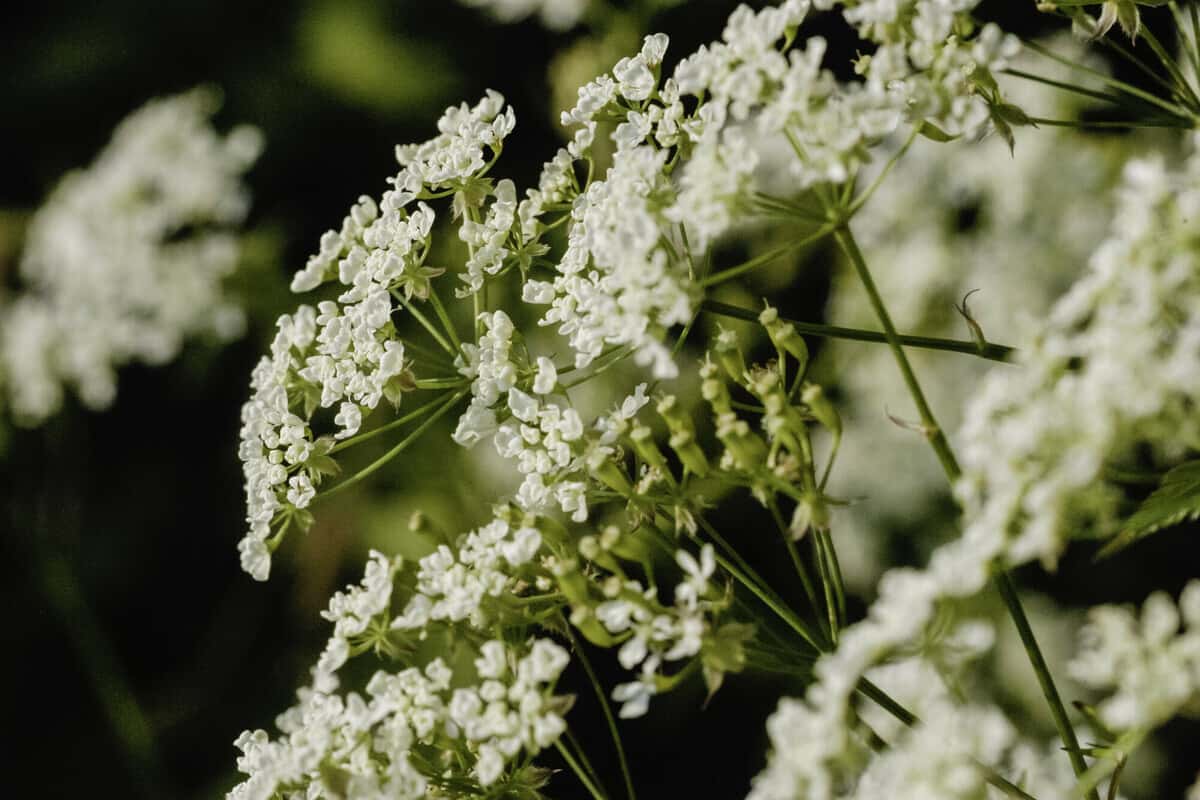
Following the cotton grass, it is now the turn of the cow parsley, which is not actually typical of Drenthe at all and is found everywhere, particularly on roadside verges. On the verges of the Oshaarseweg, it can be found in such large quantities all the way to the village of Echten that it is worth mentioning this plant after all. In some parts of the country, cow parsley is also known as ‘toeter’. It owes its name to the fact that the soft inner part of the stems can easily be removed, creating a small tube. This tube can then be used to make whistles.
Cow parsley flowers in spring, in May and June, producing a vast number of tiny white blossoms. This creates, as it were, a white strip on the roadside between the road and the area beyond the verge. The plant belongs to the umbellifer family. All plants belonging to this family share the characteristic that the flowers are arranged in umbels, meaning that each flower sits on a long stalk, with these stalks converging at a single point. The stalks then resemble the ribs of an umbrella, and the flowers form the actual umbel. In cow parsley, the various small umbels are in turn on a slightly larger stalk, and all these stalks also converge at a single point at the top of the stem. A number of these small umbels thus form a larger umbel, which can have a diameter of around six to eight centimetres.
Last but not least is the blackberry, disliked by many yet loved by just as many others. Among the former are those who have pricked themselves on its many sharp thorns; among the latter are those who have tasted its delicious fruit. The blackberry belongs to the same plant family as the rose, and this kinship is clearly evident in its sharp thorns. The leaves of the rose and the blackberry also resemble one another. The leaves of the blackberry are somewhat larger and are, as they say, pentapetalous, which means that each leaf appears to consist of five leaflets, with two pairs of leaflets opposite one another and the fifth leaflet at the tip. The blackberry bush remains low to the ground. The stems can form an enormous tangle. The white, rather unspectacular flowers appear in mid-summer. Once they have finished flowering, the fruits appear, which, like the entire plant, are called blackberries. At first they are green in colour, then red, but gradually they turn purple-red to black. That is when it is time to pick the blackberries. They are a real treat.
Blackberries are found everywhere in the bungalow area, especially near bungalow 162. They are also found in various places in the woods, for example just behind the staff accommodation and along the overgrown section of the Markeweg, to the west of the campsite.
At Westerbergen itself, most blackberries are picked too early. They are then not tasty and have a sour flavour. However, there are plenty in the surrounding area along paths that are not too heavily trodden.
This text is taken from the booklet ‘The Origins of Westerbergen’, compiled by Dr E.J. Offerhaus
Sign up for the newsletter
Protected by reCaptcha, Privacy Policy and Terms of Service apply.